

I once had a boss who told me that every issue and every answer ultimately comes back to one thing: supply chains.
Looking at our 2026 Global Cleantech 100, there are very clear indicators that navigating supply chains will be one of the biggest challenges our modern world faces this year, and likely for decades to come, specifically when it comes to critical minerals.
We’ve covered critical minerals quite a bit this year at Cleantech Group, but as a visual reminder, here’s the current situation.
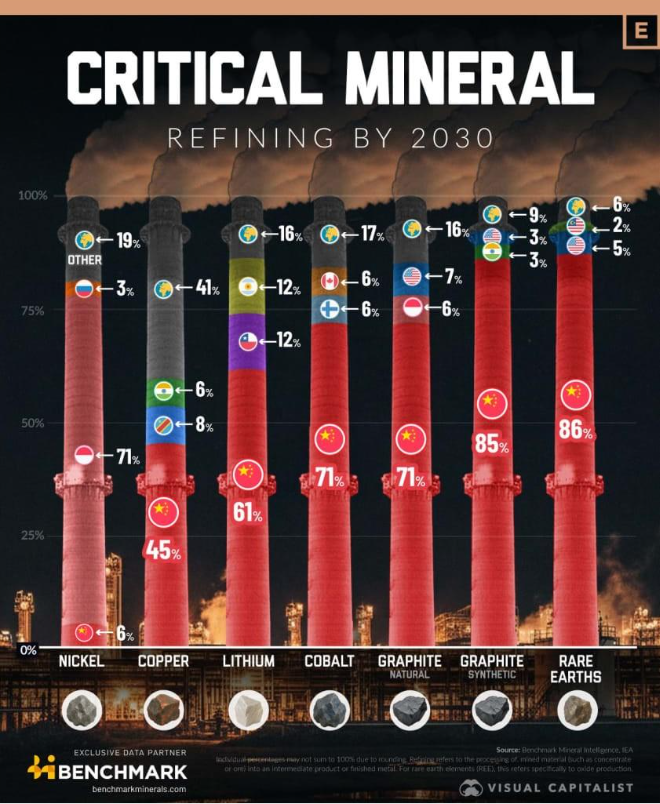
Almost every major critical mineral foundational to our lives is refined in China, with the primary exception of nickel in Indonesia, though Indonesia itself operates under significant Chinese influence. This visualization does not capture several other minerals, including iron, silicon, magnesium, and other industrial metals intwined in modern life. When a single country controls such a dominant share of a critical segment of the supply chain, shifts in the geopolitical landscape can expose global industries to inflation, tariffs, material shortages, and operational risk. Coming back from our recent Cleantech Forum North America this last week, there were multiple conversations about the strategies needed to help break this supply chain, including stockpiling, establishing floor prices and even rethinking massively controversial topics like deep sea mining.
Those actively investing in the AI and data center boom will also not be spared, as they also rely on critical minerals and metals across nearly every stage of their buildout.
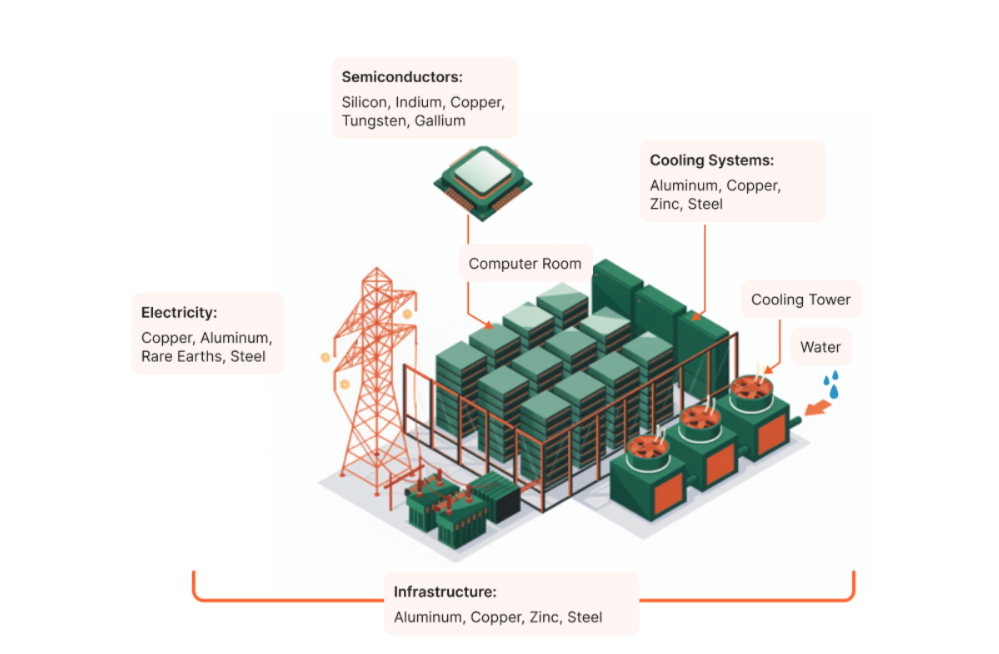
This pressure is already reshaping how major technology companies approach materials access. In early 2026, Amazon Web Services entered into a strategic agreement with Rio Tinto to secure copper produced using Rio Tinto’s Nuton bioleaching technology from the Johnson Camp mine in Arizona for use in AWS’s AI-focused data center infrastructure.
This deal represents the first new U.S.-mined copper supply in more than a decade, tied directly to AI data center development. While strategically important, the projected output—approximately 30,000 metric tons over several years—represents only a fraction of the copper required to support the growth of large-scale AI and electrification, underscoring the magnitude of demand pressure on global copper markets.
The good news is that the 2026 Global Cleantech 100 shows meaningful awareness and action aimed at alleviating these supply chain pressures through innovation.
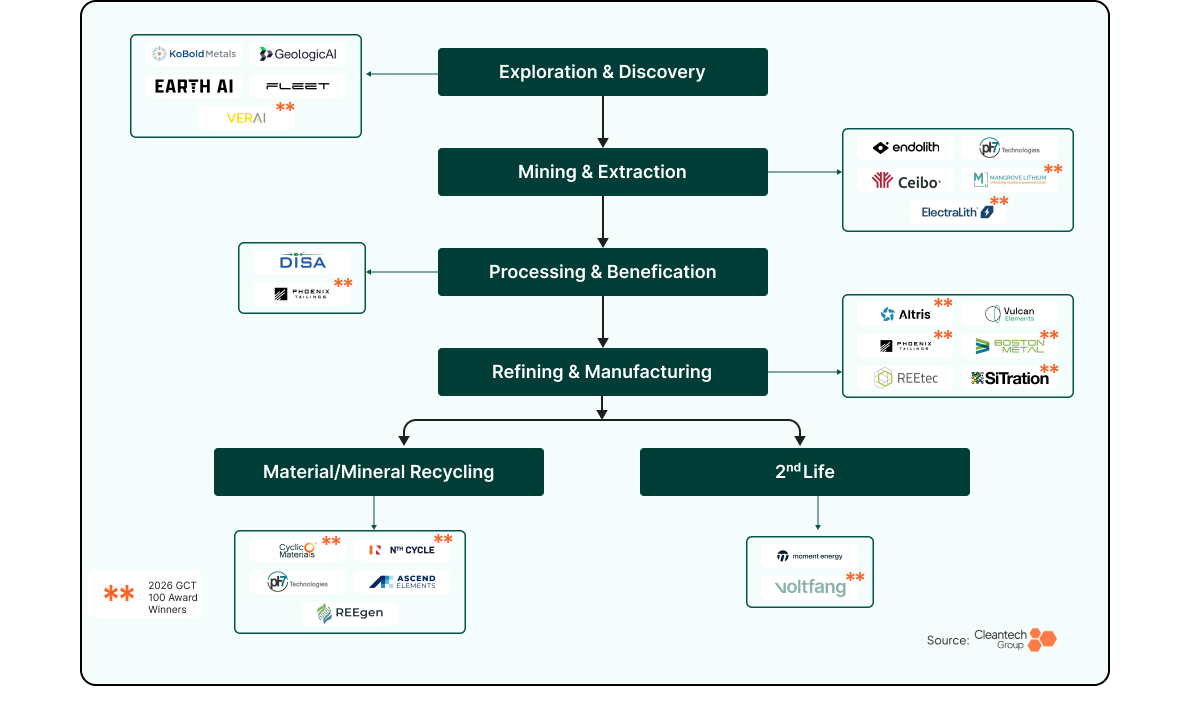
From upstream exploration and discovery to recycling and second-life applications, these innovators are not just important, they are critical if we are to break this bottleneck and build not only a cleaner but more resilient global supply chain. So, here I am five years later, writing this to acknowledge that my old boss was right (not that I ever doubted it, Daniel G).
